Some links on this page are affiliate links. If you purchase through them, FirstPawGuide may earn a commission at no additional cost to you. Recommendations are based on editorial evaluation and are not influenced by affiliate partnerships.
Wet Food vs Dry Food for Cats: Which Should You Choose as a First-Time Owner?
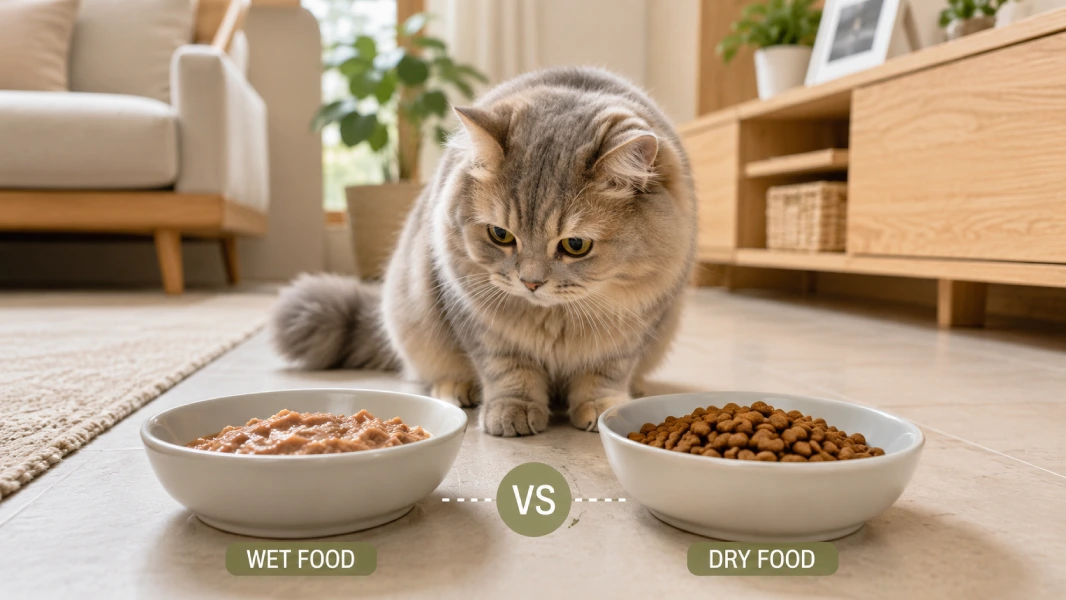
There’s no universal answer here — both wet food and dry food can be the right choice, depending on your daily routine, budget, and your cat’s preferences. This guide helps you choose based on your specific situation, not based on claims about which option is “healthier” in general. By the end, you’ll have one clear decision: wet, dry, or mixed feeding. No choice locks you in permanently — feeding routines can be adjusted as you and your cat get to know each other.
For more context on where food fits in the broader picture of cat ownership, the complete first-time cat owner guide covers every feeding decision alongside the rest of the essentials.
What This Guide Covers
- Wet, dry, and mixed feeding are all valid choices — the right one depends on your daily routine, budget, and your cat’s hydration habits, not on which option is objectively healthier.
- Cost differences are real ($20–$60/month for wet vs $15–$40/month for dry) but should be weighed alongside convenience and schedule, not treated as the deciding factor alone.
- The situation-based guide at the end walks through specific scenarios for wet, dry, and mixed feeding so you can match the choice to your actual routine.
What’s the Actual Difference Between Wet and Dry Cat Food?
Before comparing by situation, it helps to understand the core attributes of each option. The table below is the shared reference for every section that follows — each later section interprets these differences for one specific decision attribute rather than repeating them.
| Attribute | Wet Food | Dry Food |
|---|---|---|
| Moisture content | 70–80% | 8–12% |
| Texture | Soft, chunks or mousse | Hard, crunchy kibble |
| Typical serving | Per meal (served fresh) | Per day or free feeding |
| Shelf life (after opening) | 24–48 hours (refrigerated) | Weeks to months |
| Average cost | Higher per serving | Lower per serving |
| Storage | Refrigerator after opening | Room temperature, airtight container |
| Palatability | Generally higher | Varies by cat |
These are general characteristics rather than fixed rules. Individual products may differ.
The differences in this table aren’t about which option is better overall — they’re about which attributes matter most for your life as a first-time cat owner. Every section below interprets one of these attributes in terms of a specific decision.
Daily Routine and Convenience: Which Fits Your Schedule?
The first question to answer honestly: how much time and attention can you reliably give to your cat’s mealtimes every day?
Wet food fits better when you’re home for two consistent meal sessions each day, you don’t mind preparing a fresh serving at each meal, and you have consistent refrigerator space for leftovers. Wet food left in the bowl for more than one to two hours at room temperature needs to be discarded — which means you need to be present to clear and replace it on schedule.
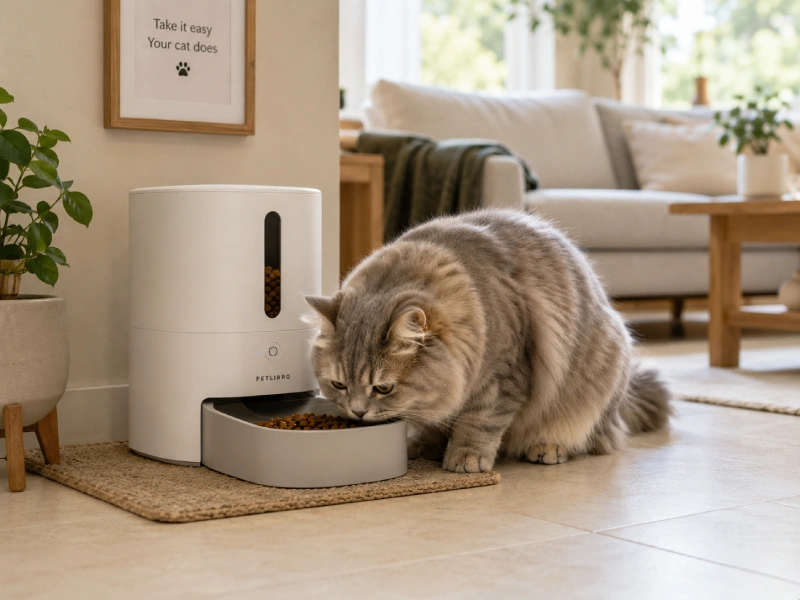
Dry food fits better when your schedule is irregular, you’re away from home for extended periods, or you want to use an automatic feeder to manage mealtimes without being physically present. Kibble can sit in the bowl without spoiling quickly, and it’s compatible with almost every automatic feeder on the market.
For first-time cat owners who work full-time or have unpredictable schedules, dry food paired with the best automatic cat feeder removes the need to be home for every meal. One practical note worth knowing early: not all automatic feeders are compatible with wet food — if you’re planning to use an automatic feeder, this is a real constraint that should factor into your food type decision before you buy either.
Cost Comparison: Which Is More Affordable Long-Term?
Cost is one of the most direct decision attributes for first-time cat owners, especially in the first months when multiple startup purchases are happening at once.
Wet food makes more financial sense when you buy in bulk (multipacks of cans tend to lower the per-serving cost significantly), you have one cat rather than multiple, and you follow a strict feeding schedule that minimizes waste. Estimated monthly cost for wet food: $20–$60 per cat, depending on brand and feeding frequency.
Dry food is the more budget-friendly option when you purchase larger bags and store them properly, you have more than one cat, or you need to keep monthly pet expenses predictable and controlled. Estimated monthly cost for dry food: $15–$40 per cat — a meaningful difference that adds up over a full year of ownership.
For first-time owners building a cat ownership budget from scratch, the $5–$20 monthly difference is real but shouldn’t be evaluated in isolation. Cost differences are best assessed alongside your daily routine — not as the single deciding factor. Estimates vary by brand, region, and where you shop.
Hydration and Moisture: What First-Time Owners Should Know
Moisture content is one of the most significant practical differences between wet and dry food — relevant here as an ownership attribute, not a medical claim.
Wet food contributes more to daily water intake when your cat doesn’t drink much on their own. Because wet food contains 70–80% moisture, every serving automatically increases total fluid intake without your cat needing to choose to drink more. For cats that consistently ignore their water bowl, this is a meaningful practical difference.
Dry food requires a reliable secondary water source to compensate for its low moisture content. If you choose dry food, making sure your cat has consistent access to fresh water becomes more important, not less. A cat water fountain often works better than a standard bowl at encouraging cats to drink — the moving water is more appealing to most cats than still water.
The practical question for first-time owners is simple: does your cat drink actively on their own? If your new cat rarely approaches the water bowl, wet food is an easy way to ensure adequate fluid intake without additional management. If your cat drinks consistently, dry food with a good water source is equally workable. Whatever food type you choose, access to fresh water remains a daily routine essential.
If you have specific health considerations around your cat’s hydration, your vet is the right person to advise on diet.
Storage, Shelf Life, and Waste: Practical Realities of Each Option
The choice between wet and dry food also affects how you manage your kitchen and your cat’s feeding area on a daily basis.
Wet food requires more active storage management — opened cans need to be covered and refrigerated, and food left in the bowl beyond one to two hours should be discarded. This means a higher risk of waste if your cat doesn’t finish a serving, and a consistent need for refrigerator space dedicated to cat food.
Dry food is significantly simpler to manage for storage — unopened bags last months, and opened bags need only an airtight container at room temperature. Waste is lower because kibble doesn’t spoil quickly once the bowl is filled. One practical investment worth making early: a good-quality food storage container keeps dry food fresh for longer and reduces odor in your storage area, which matters more in smaller living spaces.
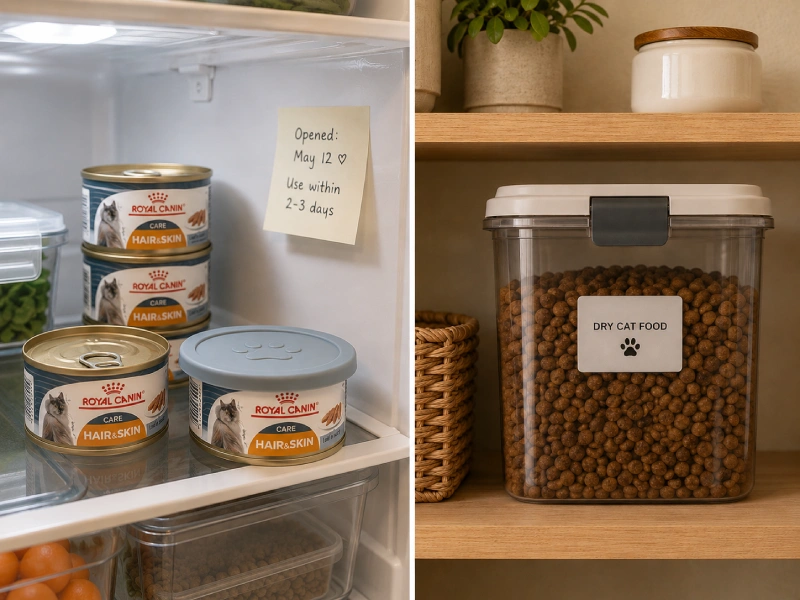
For first-time cat owners still building their daily routines, dry food offers fewer time-sensitive steps — no refrigerator deadlines, no risk of a forgotten serving going bad in the bowl. Wet food requires a bit more routine discipline around serving times and storage.
Can You Feed Both? What First-Time Owners Need to Know About Mixed Feeding
When Mixed Feeding Makes the Most Sense
Mixed feeding is a deliberate choice — not something you default to when you can’t decide between wet and dry. There are specific situations where combining both genuinely works better than either option alone:
- You want the moisture benefits of wet food without the full cost of wet-only feeding
- Your cat enjoys variety in texture and flavor as part of their daily routine
- You want wet food for a scheduled morning meal and dry food for automated daytime portions
- You’re in the middle of transitioning from one food type to the other
- Your monthly food budget sits between the wet-only and dry-only cost ranges
- You want to avoid full dependence on one food format over the long term
How to Set Up Mixed Feeding in Practice
If mixed feeding is the right choice for your situation, here’s how to build the routine:
- Decide your wet-to-dry ratio upfront — common approaches are 50/50, or wet in the morning and dry for automated daytime or evening portions
- Adjust the total daily portion to account for both food types — wet and dry both contribute to daily calorie intake, and the amounts need to be calibrated together
- Introduce the combination gradually if your cat currently eats only one type — mix in the new food type incrementally over 7 to 10 days
- Keep wet food portions on a consistent schedule — wet food left in the bowl too long needs to be discarded, so timing matters more than with dry food alone
- If you’re using an automatic feeder for daytime dry food portions, confirm it’s compatible with kibble before committing to that setup
Once the routine is established, avoid changing the ratio frequently unless you have a specific reason to do so — consistency helps your cat adjust and makes it easier to identify what’s working.
Mixed feeding takes slightly more planning in the first few weeks, but once the routine is established it offers flexibility that neither wet-only nor dry-only feeding provides on its own.
Which Should You Choose? A Situation-Based Guide for First-Time Cat Owners
If you’ve read this far, you don’t need more information — you need to choose the option that best matches your situation.
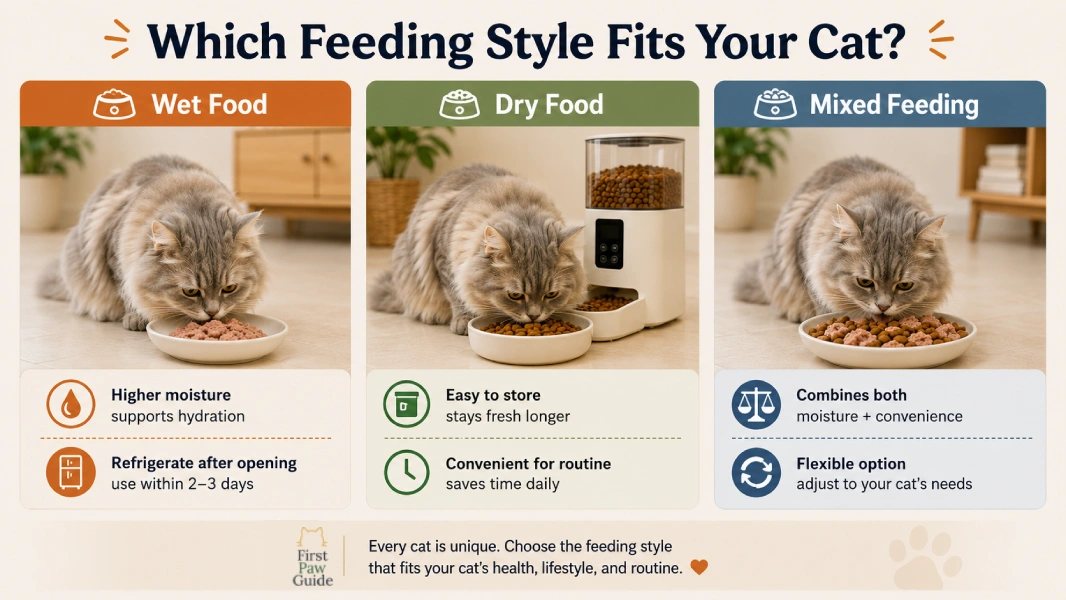
Quick Decision Guide
Works well if
- You’re reliably home for two feeding sessions each day
- Your cat doesn’t drink much water on its own
- You have refrigerator space and don’t mind preparing fresh servings
Less suitable if
- Your schedule is irregular or you’re away from home for extended periods
- You want to use a standard automatic feeder without compatibility constraints
- Keeping monthly costs as low as possible matters more than other factors
Choose Wet Food If…
Choose this if:
- Your cat doesn’t drink much water independently
- You prefer a meal-based feeding schedule with portioned servings, and are reliably home for two feeding sessions each day
- Your cat is a picky eater, or you’re feeding a kitten or older cat where softer texture is a practical consideration
If this sounds like your situation, wet food is likely the simpler starting point.
![[Product Name] — wet cat food](/assets/images/products/[wet-food-product-image].webp)
[Product Name]
Best for: Owners who can commit to two fresh feeding sessions a day
[Reason — 1-2 sentences, decision-context framing]
Works well if
- Your schedule is irregular or you’re frequently away from home
- You want lower, more predictable monthly costs ($15–$40 vs $20–$60)
- Storage simplicity matters — no refrigeration, longer shelf life
Less suitable if
- Your cat rarely drinks water on its own and needs extra hydration support
- Your cat is a picky eater, since palatability with kibble varies more by cat
Choose Dry Food If…
Choose this if:
- You want the flexibility of free feeding or automated dispensing with a standard feeder
- You’re frequently away from home or work irregular hours, and keeping monthly food costs lower is important right now
- Your cat drinks water consistently and actively on its own
If this matches your routine, dry food is likely the simpler starting point.
![[Product Name] — dry cat food](/assets/images/products/[dry-food-product-image].webp)
[Product Name]
Best for: Owners with irregular schedules who want predictable monthly costs
[Reason — 1-2 sentences, decision-context framing]
Works well if
- You want the moisture benefit of wet food without the full cost of wet-only feeding
- Your cat enjoys variety in texture and flavor
- Your monthly food budget sits between the wet-only and dry-only cost ranges
Less suitable if
- You’re looking for it because you can’t decide, rather than for a specific reason — mixed feeding is a deliberate choice, not a default
- You’re not able to keep wet food portions on a consistent schedule in the first few weeks
Consider Mixed Feeding If…
Choose this if:
- You want a scheduled wet food meal in the morning and automated dry food during the day
- You’re currently transitioning between food types, or your budget falls between the wet-only ($20–$60) and dry-only ($15–$40) ranges
- You want long-term feeding flexibility without full dependence on one food format
If several of these situations apply to you, mixed feeding is likely the more practical long-term approach.
![[Product Name] — mixed feeding starter set](/assets/images/products/[mixed-feeding-product-image].webp)
[Product Name]
Best for: Owners who want flexibility without full dependence on one food format
[Reason — 1-2 sentences, decision-context framing]
What About Freeze-Dried or Raw Food?
Freeze-dried and commercially pre-packaged raw cat food exist as options, but both involve more complexity in preparation, storage, and cost than wet or dry food — which makes them less practical as a starting point for first-time owners. Both can be explored once you have a stable feeding routine and a better sense of your individual cat’s preferences. For most first-time cat owners, simplifying the first feeding decision tends to produce a routine that’s easier to maintain consistently.
Ready to complete your feeding setup? Return to the new cat checklist to continue working through the remaining supply categories before your cat arrives.