New Cat Checklist: Everything First-Time Cat Owners Need Before and After Bringing a Cat Home
This checklist is the practical companion to the complete first-time cat owner guide — if that guide helps you understand the journey, this one helps you execute it. Use this page as a working list you can check off as you go: buy what you need, prepare your home, and know what to do in the first week. Everything is organized in the order you’ll actually need it.

What This Guide Covers
- Home preparation checklist — what to set up before your cat arrives, starting with the safe room.
- A complete supply checklist across six categories, with a direct link to the right buying guide for each purchase decision.
- A first week action sequence and a realistic breakdown of startup and ongoing costs.
Before Your Cat Arrives: Home Preparation Checklist
Home preparation comes first — before supplies are unboxed, before your cat walks through the door. Two priorities to complete before arrival day: building a safe room and making sure the bare minimum is in place from day one.
Setting Up a Safe Room First
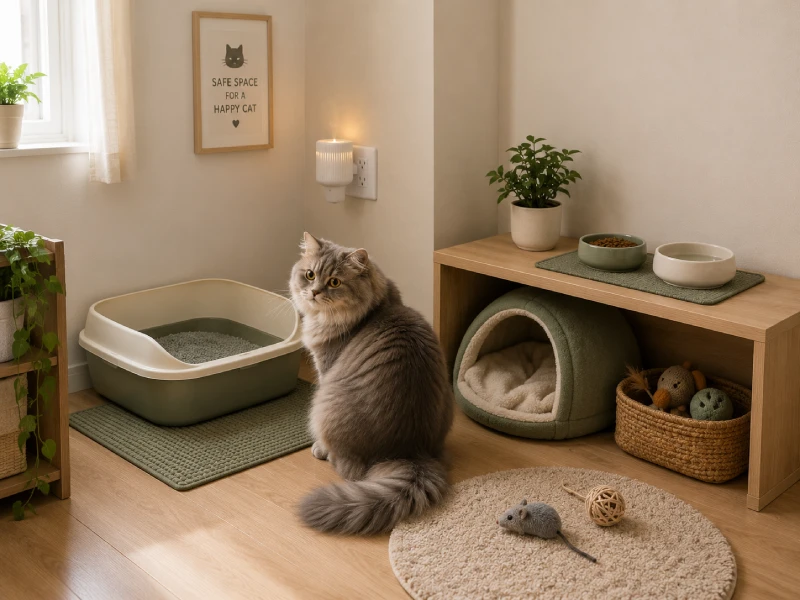
A safe room gives your cat one controlled space to adjust to before they’re introduced to the rest of your home. Starting here makes the transition significantly smoother.
- Choose one quiet room as your cat’s dedicated safe space
- Place the litter box in a corner, away from the food and water area
- Set up a food bowl and a source of fresh water
- Add a bed or soft blanket in a low, sheltered spot
- Include one or two simple toys
- Install a pheromone diffuser 24 to 48 hours before your cat arrives
- Remove hazards from the room: exposed cables, toxic plants, and small objects that could be swallowed
Day-One Minimum Setup (If You’re Short on Time)
If you’ve just decided to bring a cat home and time is limited, these five things are non-negotiable. Everything else can follow, but these cannot wait.
- Set up a litter box with litter
- Place food and fresh water in the safe room
- Add one hiding spot — a cardboard box, your carrier, or a covered bed
- Remove visible hazards from the room
- Close off any areas of the home you’re not ready to cat-proof yet
The Complete Supply Checklist for New Cat Owners
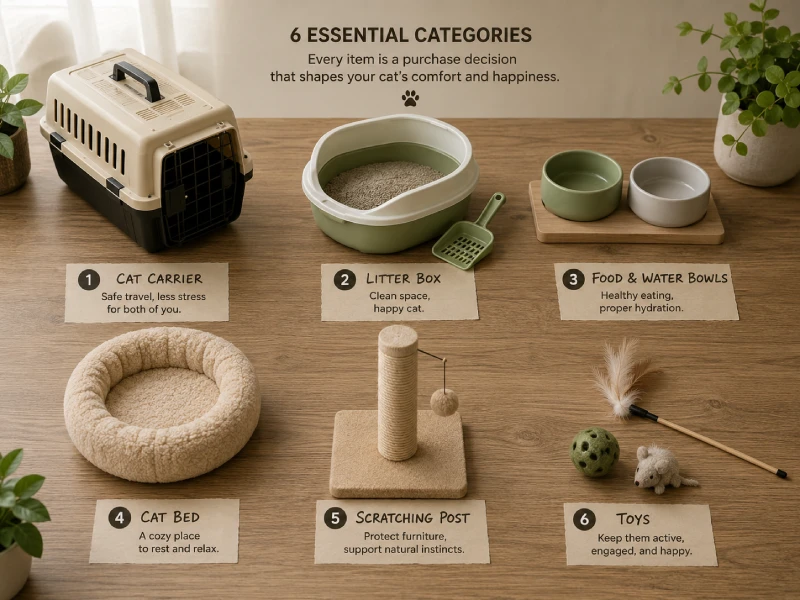
The six categories below cover every purchase you need to make before your cat arrives. Work through them as a shopping list — check off what you’ve bought, flag what’s still needed.
Feeding Supplies
- Cat food (wet, dry, or a combination of both)
- Food bowl (ceramic or stainless steel — avoid plastic)
- Water fountain or water bowl
- Automatic feeder (optional for consistent meal schedules)
- Food storage container (keeps dry food fresh)
- Feeding mat or placemat
Litter Box Setup
- Litter box (sized appropriately for your cat)
- Cat litter (clumping or non-clumping)
- Litter scoop
- Litter mat (placed just outside the box)
- Waste disposal bags or a litter genie
- Deodorizer or baking soda (optional)
Comfort and Rest
- Cat bed (donut, cave, or flat mat — depends on your cat’s preferences)
- Cat tree or cat tower
- Hiding spot or cat cave
- Extra blanket or soft throw
- Window perch (optional)
Enrichment and Play
- Scratching post (vertical, tall enough for a full stretch)
- Wand or teaser toy
- Automated toy (for stimulation when you’re not home)
- Puzzle feeder or treat dispenser
- Catnip or silvervine toy
- Cat tunnel (optional)
Grooming Essentials
- Cat brush (type depends on coat length)
- Nail clippers (cat-specific)
- Grooming glove (a gentler alternative to brushes)
- Cat toothbrush and enzymatic toothpaste
- Grooming wipes
- Styptic powder (for nail clipping emergencies)
Carrier and Identification
- Cat carrier (hard-sided or soft-sided)
- Carrier pad or liner
- Breakaway collar
- ID tag with your current contact details
- GPS collar (optional)
First Week Checklist: What to Do After Your Cat Arrives
The first week is about giving your cat space and building consistent patterns — not rushing connection. Follow this sequence:
- Keep your cat in the safe room for the first 2 to 3 days
- Set consistent meal times from day one and stick to them
- Place your cat in the litter box right after meals and after waking up
- Let your cat initiate contact — don’t force handling or interaction
- Start short play sessions: 5 to 10 minutes per day is enough in week one
- Gradually expand room access after 3 to 5 days, one room at a time
- Schedule a vet visit within the first two weeks of bringing your cat home
- Begin a brief daily grooming habit — even a minute of brushing builds trust
- Note any behaviors that seem unusual to discuss at your first vet appointment

If you’ve worked through everything above, you’re in great shape for your cat’s arrival. You’ve covered the practical side. Now make sure your budget matches your plan.
How Much Does a New Cat Cost?
Understanding the cost structure before you buy helps you prioritize with confidence.
Note: All estimates are in USD. Costs vary by location, product choice, and where you shop.
Startup Costs vs Monthly Ongoing Costs
One-time startup costs:
- Cat tree or tower: $30–$150
- Litter box: $10–$200 (basic open box to self-cleaning)
- Carrier: $15–$80
- Cat bed: $10–$50
- Feeding setup (bowls, water fountain): $10–$60
- Basic grooming tools: $10–$30
- Toys and scratching post: $10–$40
Estimated total startup cost: $95–$610
Monthly ongoing costs:
- Cat food (wet and/or dry): $15–$60 per month
- Cat litter: $8–$25 per month
- Routine veterinary care (averaged monthly): $8–$25
- Replacement toys and supplies: $4–$15 per month
Estimated monthly ongoing cost: $35–$125
What to Prioritize If You’re on a Budget
If budget is tight, buy in this order — these are ranked by how immediately each item is needed:
- Litter box and litter — nothing else works without this in place first
- Food and fresh water — required from the moment your cat arrives
- Carrier — needed for the trip home and the first vet visit
- A bed or simple hiding spot — your cat needs a safe place to rest from day one
- Scratching post — prevents furniture damage early and fulfills a natural behavior
- Cat tree and additional enrichment — add these once the essentials are covered
Is It Okay to Start with Just the Basics?
Yes — starting with essentials only is completely valid for first-time cat owners. The items that cannot wait are: litter box, food, fresh water, and a carrier. Everything else — a cat tree, automated toys, a complete grooming kit — can be added once you’ve seen how your cat settles in and what they actually use. Start with what’s needed on day one, then build from there.