The Complete First-Time Cat Owner Guide: Everything You Need Before, During, and After Bringing Your Cat Home
If you’re a first-time cat owner, this guide is built for you. It walks you through every major decision you’ll need to make — in the right order — so you can feel prepared before your cat arrives and confident as you settle into life together. Cat ownership isn’t just about buying the right products. It’s about making the right decisions, at the right time, for your cat and your lifestyle.
Think of this guide as your cat ownership roadmap. You can read it from start to finish, following the natural timeline from pre-arrival decisions all the way through long-term routines. Or you can jump directly to the section most relevant to where you are right now. Each section is designed to stand on its own and will point you toward more detailed guides whenever you need to go deeper on a specific decision.

What This Guide Covers
- The three foundational decisions — indoor/outdoor setup, one cat or two, kitten or adult — that shape every purchase you’ll make before your cat arrives.
- A complete essential supply list organized by category (feeding, litter, comfort, enrichment, grooming, transport), each with a link to the in-depth buying guide for that decision.
- What to expect in your cat’s first week at home, how to build a sustainable daily routine, and what cat ownership realistically costs.
Choosing the Right Cat Ownership Setup Before You Bring Your Cat Home
Before you buy a single product, three foundational decisions will shape almost every purchase you make: whether your cat will live indoors or have outdoor access, whether you’ll start with one cat or two, and whether you’re adopting a kitten or an adult cat. These decisions form your ownership configuration — the foundation everything else is built on.
Indoor Cat or Outdoor Cat: Which Setup Are You Preparing For?
The indoor-versus-outdoor question matters most for its product and setup implications, not as a debate about which lifestyle is better. Different setups require different preparations, and knowing which one applies to you determines where to focus your budget first.
If you’re setting up for an indoor-only cat, your priorities are vertical space (a cat tree or wall shelves), stronger mental stimulation (puzzle feeders, interactive toys), and dedicated scratching surfaces to protect your furniture. If your cat will have access to outdoor areas, you’ll need to account for balcony safety nets, reinforced window screens, or a catio structure to keep outdoor time safe and controlled. Both setups require the same core essentials — the differences show up in enrichment and home safety categories.
One Cat or Two? What First-Time Owners Should Consider
Starting with one or two cats changes your setup requirements from day one. Two cats need at least three litter boxes (the standard rule: number of cats plus one), separate feeding stations to reduce competition, and enough enrichment resources that neither cat feels the need to guard them.
For first-time cat owners, starting with one cat gives you the space to understand that specific cat’s personality, preferences, and needs before adding complexity. Once your first setup is running smoothly, adding a second cat becomes a much more deliberate and manageable decision.
Kitten or Adult Cat: How Your Choice Affects What You Buy
A kitten and an adult cat require meaningfully different products. Kittens need life-stage-specific food with higher protein and calorie content, litter boxes with lower entry sides so they can climb in easily, and smaller, lighter toys suited to their size and coordination. An adult cat coming from a shelter may already have established food preferences, so transitioning to a new diet needs to be done gradually over 7 to 10 days.
From a home safety perspective, kittens require stricter kitten-proofing — small gaps behind furniture, exposed cables, and small objects that could be swallowed all need to be addressed before they arrive.
How to Prepare Your Home Before Your Cat Arrives
Home preparation is the most important first step in the cat ownership process. Done well, it gives your cat a safe and calm environment to begin adjusting to — which directly affects how quickly they settle in.
Four priorities to complete before your cat’s arrival day:
- Safe room setup — choose one room as your cat’s initial base. It should contain everything they need: food, water, a litter box, a bed, and one or two toys. Allow your cat to adjust to this smaller space before expanding access to the rest of your home.
- Cat-proofing — walk through your home and eliminate hazards before your cat arrives. Exposed electrical cords, gaps behind large furniture, toxic houseplants, and small objects that could be swallowed are the top priorities.
- Day-one placement — decide where the litter box, feeding station, and sleeping area will be located permanently. Consistent placement from day one helps your cat build spatial orientation faster.
- Pheromone diffuser — a plugin pheromone product like Feliway, set up a few days before your cat arrives, creates a calmer atmosphere in an unfamiliar environment.
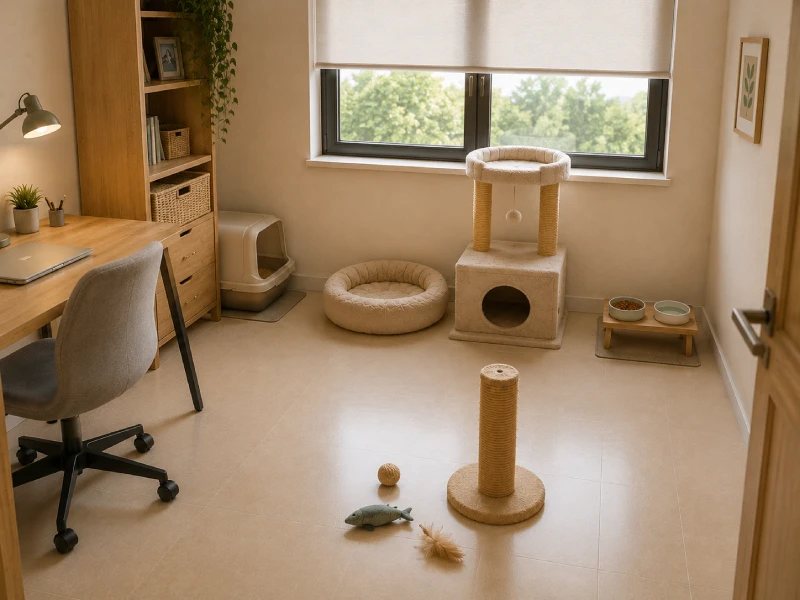
Once your home is ready, the next decision is choosing the supplies you’ll need before your cat arrives.
What to Buy Before Bringing Your First Cat Home: The Essential Supply List
This is the section most first-time cat owners come back to most often. Each category below represents one purchase decision domain — and each has a dedicated guide to help you choose the right product for your specific situation.

Feeding Supplies: What Every First-Time Cat Owner Needs
The first feeding decision every first-time cat owner faces is what to feed — and that choice shapes everything else in this category.
- Cat food (wet, dry, or a combination of both)
- Food bowl (ceramic or stainless steel over plastic, which can harbor bacteria)
- Water source (a cat water fountain encourages more consistent drinking than a standard bowl)
- Automatic feeder (useful if you work long hours or travel regularly)
- Food storage container (keeps dry food fresh and reduces odor)
Litter Box and Litter: Setting Up the Right System
The litter setup is one of the most under-researched purchases among first-time cat owners — and one of the most consequential for daily life at home.
- Litter box (open, covered, top-entry, or self-cleaning — each suits different cats and spaces)
- Cat litter (clumping or non-clumping, clay or natural materials)
- Litter scoop (essential from day one)
- Litter mat (reduces tracking outside the box)
- Waste disposal system (litter bags or a litter genie for easier cleanup)
A Comfortable Place to Rest: Beds, Trees, and Hiding Spots
Cats sleep between 12 and 16 hours a day. Providing the right resting options isn’t optional — it’s a core part of responsible cat ownership.
- Cat bed (donut, cave, or flat mat — preference varies by cat)
- Cat tree or tower (combines vertical space, scratching surface, and resting spots in one)
- Hiding spot (a cat cave or enclosed tent gives cats a place to retreat when they need space)
- Wall-mounted cat shelves (a good option for smaller apartments where floor space is limited)
Enrichment and Scratching: Keeping Your Cat Active
Indoor cats need daily active stimulation. Without appropriate outlets for their hunting instincts and natural scratch behavior, your furniture becomes the outlet by default.
- Scratching post (vertical, tall enough for your cat to stretch fully upright)
- Wand toy (feather wands or teasers for interactive play sessions)
- Automated toy (electronic wands or motion-activated toys for stimulation when you’re not home)
- Puzzle feeder (combines mealtime with mental engagement)
- Catnip or silvervine toys (for sensory enrichment)
Grooming Tools: Starting the Right Habits Early
Regular grooming builds trust between you and your cat — and it’s significantly easier to establish as a habit when started early, before resistance sets in.
- Cat brush (type depends on coat length — slicker for short hair, deshedding tool or wide-tooth comb for long hair)
- Nail clippers (scissor-style or guillotine, designed for cats)
- Grooming glove (a gentler alternative for cats not yet comfortable with brushes)
- Dental care tools (cat toothbrush and enzymatic toothpaste, or dental treats as a starting point)
- Grooming wipes (for quick cleanups between full grooming sessions)
A Carrier: Your Cat’s Safe Transport Solution
Every cat owner needs a carrier — at minimum for routine vet visits. Buying one before your cat arrives means you can introduce it as a familiar, neutral space from the start, rather than something that only appears before stressful events.
Hard-sided carriers offer more structure and protection; soft-sided carriers are lighter and easier to manage in smaller spaces.
What to Expect in Your Cat’s First Week at Home
The first week is the most critical adjustment period — and also the one most likely to cause unnecessary worry for first-time cat owners. Most behaviors that seem alarming in week one (hiding, eating less, staying very still) are normal stress responses to a new environment, not signs of illness.
Here are the five most important things to prioritize during your cat’s first week:
- Start with the safe room, not the whole house. Give your cat 2 to 3 days to adjust in a single room before expanding their access. Rushing this process extends the adjustment period, not shortens it.
- Establish a feeding schedule from day one. Consistent meal timing helps your cat build a daily rhythm and reduces anxiety about resource availability.
- Introduce the litter box actively. Place your cat in the litter box right after eating and after waking from naps — this builds the association quickly and reliably.
- Keep stimulation low. Excited visitors, loud environments, or too much handling in the first few days slows adjustment. Let your cat initiate contact on their own timeline.
- Begin short play sessions. Five to ten minutes with a wand toy each day is enough in week one. It builds connection and helps your cat start associating you with positive experiences.

Building a Daily Cat Care Routine as a First-Time Owner
Sustainable cat ownership is built on routine. Cats are strongly pattern-oriented — a consistent daily schedule reduces their stress and makes your responsibilities predictable and manageable.
Four components form the foundation of any effective daily cat care routine:
- Feeding schedule — set consistent meal times and stick to them. Scheduled feeding (rather than free feeding) makes it easier to monitor appetite and notice changes early.
- Litter box maintenance — scoop at least once daily, deep clean once a week. A clean box means a cat that consistently uses it.
- Play sessions — at least 10 to 15 minutes per day for adult cats, slightly more for kittens. Evening play sessions help cats burn energy before bed, which means fewer 3am wake-up calls.
- Grooming routine — frequency depends on coat length. Short-haired cats: once a week. Long-haired cats: two to three times a week to prevent matting.

How to Set Up Your Home for Long-Term Cat Ownership
Long-term home setup is different from first-week preparation. It’s about creating an environment that evolves with your cat — one that remains functional and comfortable as their habits and needs become clearer to you.
Two areas typically need adjustment after the first few months of cat ownership:
The first is space organization. Cats need clear, non-overlapping zones: eating, elimination, play, and rest should each have a defined location. In smaller apartments, this requires more intentional vertical planning. For apartment owners especially, setting up a cat-friendly living space covers vertical space use, furniture protection, and safe room design for a range of home types.
The second is household integration. After initial adjustment, the longer-term challenge is coexistence — with other family members, regular visitors, or other pets. As your cat grows more comfortable, integrating your cat into your household addresses furniture management, guest introductions, and multi-pet dynamics over the long term.
What Does It Really Cost to Own a Cat?
Many first-time cat owners underestimate total ownership costs — not because they’re unprepared, but because there’s rarely a clear breakdown available before the first purchases are made. Understanding the cost structure before your cat arrives helps you budget more accurately and prioritize where to spend.
Note: Estimates below are in USD. Actual costs vary by location, product quality, and where you shop.
Startup Costs: What to Budget Before Your Cat Arrives
Startup costs are the largest single outlay — and the one most likely to catch first-time owners off guard.
- Cat tree or tower: $30–$150
- Litter box: $10–$200 (depending on type — basic open box vs. self-cleaning)
- Carrier: $15–$80
- Cat bed: $10–$50
- Feeding setup (bowls, water fountain): $10–$60
- Basic grooming tools: $10–$30
- Toys and scratching post: $10–$40
Estimated total startup cost: $95–$610, depending on product choices.
Monthly Ongoing Costs: What to Expect Long-Term
- Cat food (wet and/or dry): $15–$60 per month
- Cat litter: $8–$25 per month
- Routine veterinary care (averaged monthly): $8–$25
- Replacement toys and supplies: $4–$15 per month
Estimated monthly ongoing cost: $35–$125, depending on food choices, litter type, and vet visit frequency.
How to Reduce Cat Ownership Costs Without Cutting Corners
- Invest in durable equipment upfront. A more expensive cat tree or litter box often costs less over time than replacing a cheaper version that breaks or wears out quickly.
- Buy dry food in larger quantities. Larger bags cost significantly less per serving — as long as storage keeps the food fresh.
- Prioritize the essentials first. Not everything on a “new cat checklist” needs to be purchased in month one. Start with what’s necessary, add the rest gradually.
- Use buying guides before purchasing. Each Core article on FirstPawGuide is designed to help you make value-based decisions — not just find the cheapest option or the most expensive one.
Your First Cat Ownership Journey Starts Here
Becoming a first-time cat owner doesn’t have to feel overwhelming. Every decision you need to make — from initial setup to long-term routines — becomes manageable when approached in the right order and with the right information. That’s what this guide is for.
One thing worth remembering: no first-time cat owner gets everything right from day one. You’ll learn from your cat — from their preferences, habits, and the way they communicate with you — and the best setup is one that develops alongside that understanding.
The best next step is our new cat checklist — it’s the practical companion to this guide, pulling every decision covered above into one organized list you can use from day one. Start there, and return to this guide whenever you need more context on a specific decision.